Recoverable depreciation on a roof claim: how to collect it
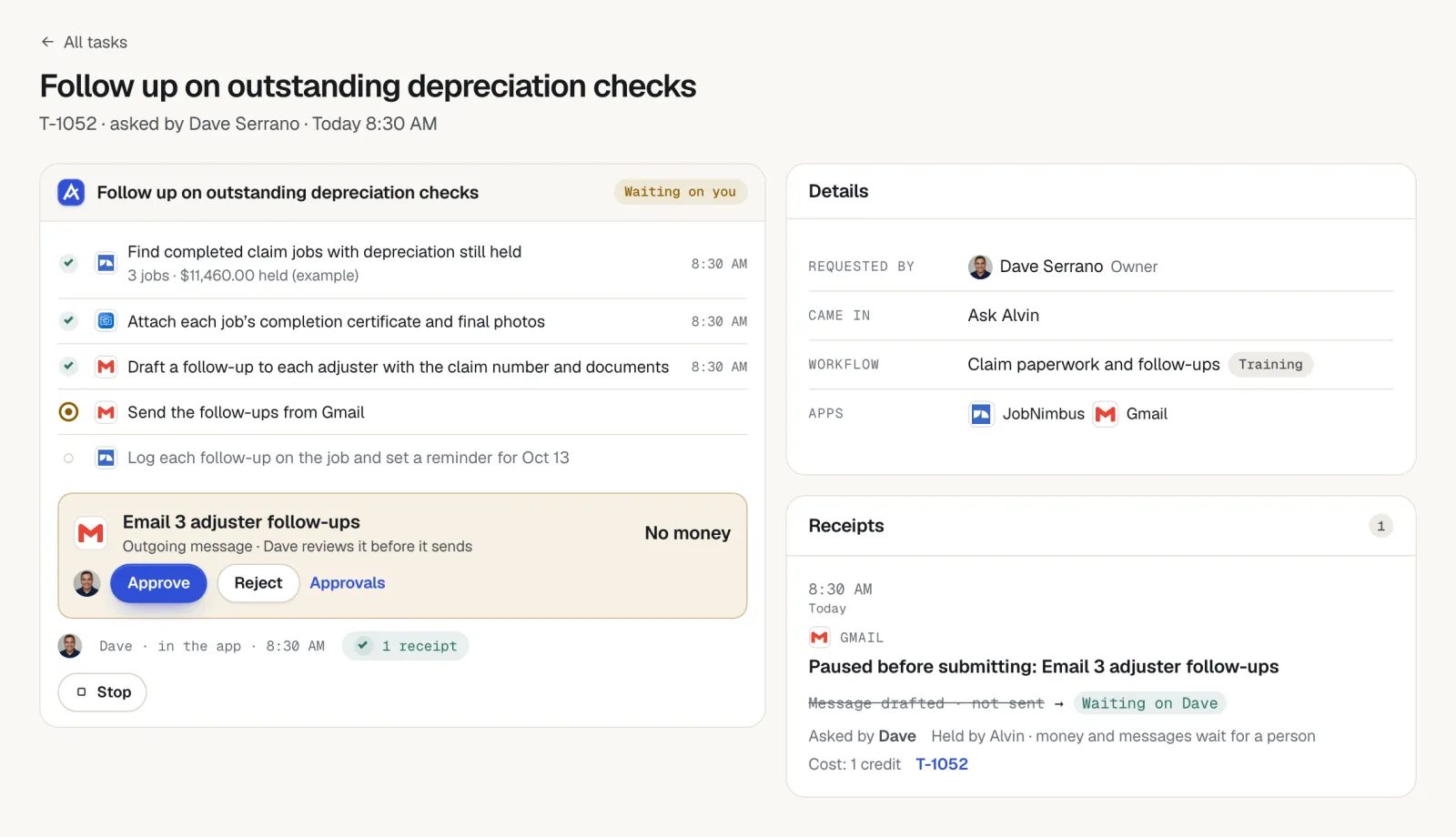
Recoverable depreciation is the part of a roof claim the insurer holds back until the roof is actually replaced. To get it, the homeowner (or the contractor, where allowed) sends the insurer proof the work is done, usually a final invoice, a completion certificate and photos, before the deadline in the policy. The insurer then releases the held amount, generally up to what was really spent. Alvin tracks the holdback on every job, assembles those documents and follows up until the check arrives.
On this page
- Recoverable vs non-recoverable depreciation
- The documents an insurer typically asks for
- How to get recoverable depreciation, step by step
- Wording you can copy
- A recoverable depreciation tracking checklist per job
- Why depreciation checks get left on the table
- What Alvin handles and what stays with you
- Questions
Recoverable vs non-recoverable depreciation
Both start the same way. The adjuster prices the new roof, then subtracts an amount for the age and wear of the old one. What happens to that subtracted amount depends on the policy.
Scroll sideways to see every column.
| Recoverable | Non-recoverable | |
|---|---|---|
| Typical policy type | Replacement cost coverage | Actual cash value coverage, or a roof endorsement or schedule that limits payment |
| Paid after completion? | Yes, when the documents are accepted | No |
| Who covers that amount | The insurer, with the second check | The homeowner |
| What the contractor should do | Track it and send the completion packet | Tell the homeowner before the job starts |
A single claim can carry both. The shingles might be recoverable while a line for a detached shed or an older item is not. Read the statement line by line. For how the two policy types differ from the first check on, see ACV vs RCV on a roof claim.
This article is general information, not insurance or legal advice. Coverage, deadlines and who may contact the insurer vary by policy and state. The policy and the insurer govern each claim.
The documents an insurer typically asks for
Each insurer has its own list, and the adjuster's letter or the claim portal will state it. These are the usual items:
- Final invoice. On your letterhead, with the claim number, the property address, the work completed and the total charged. The insurer usually pays depreciation only up to the amount actually spent, so the invoice total matters.
- Certificate of completion. A short signed statement that the work is finished, with the completion date. Some insurers want the homeowner's signature on it.
- Completion photos. All slopes, plus close-ups of the items on the scope: ridge, vents, flashing, drip edge.
- The signed contract, if the insurer asks for it.
- Supplement paperwork, if the final cost differs from the original scope. An approved supplement changes the depreciation amount. See roofing supplement follow-up.
- Permit sign-off or inspection record, where the insurer or a code upgrade line requires it.
How to get recoverable depreciation, step by step
- Find the number on day one. When the loss statement arrives, write the recoverable depreciation amount and the claim number on the job record.
- Ask the homeowner for the deadline. Policies set a time limit to finish repairs and claim the holdback. The length varies by policy and state, so get it from the policy or the adjuster and put the date on the job.
- Take the photos on the last day. Before the crew leaves, not on a return trip.
- Issue the final invoice within a day or two of completion. Match the line descriptions to the insurer's scope where the work matches, so the reviewer can compare quickly.
- Send the packet. The homeowner usually submits it through the claim portal or the adjuster's email. Some homeowners ask the contractor to send it for them; check what your state allows a contractor to do on a claim.
- Follow up on a schedule. For example, check at 7 days and again at 14. Ask whether anything is missing, and nothing else.
- Collect the final balance. When the homeowner receives the check, send the balance invoice with a payment link.
Wording you can copy
To the homeowner, the day the roof is finished:
"Hi Mr. Garcia, your roof is complete. Attached are the final invoice, the completion certificate and the photos. Your insurer is holding $4,150 in recoverable depreciation on claim 00-1234. Please upload these three files to your claim portal or reply and we will walk you through it. Once they release the payment, the remaining balance on your invoice is due."
Status check, 7 days later:
"Hi Mr. Garcia, checking in on the depreciation payment for your roof claim. Has the insurer confirmed they received the completion documents? If they asked for anything else, forward it to us and we will get it to you the same day."
The dollar amount and claim number above are examples. A status request asks whether the documents were received and whether anything is missing. Leave what the claim should pay out of it.
A recoverable depreciation tracking checklist per job
Add these fields to every insurance job.
| Field | Filled in when |
|---|---|
| Claim number, insurer, adjuster contact | Loss statement received |
| Recoverable depreciation amount | Loss statement received, updated after any supplement |
| Non-recoverable amount, and homeowner told (yes or no) | Before the contract is signed |
| Policy deadline to complete and claim | Homeowner or adjuster confirms it |
| Completion date and photos saved | Last day on site |
| Final invoice sent | Within a day or two of completion |
| Packet submitted: by whom, on what date | Submission |
| Follow-up dates | Each check-in |
| Depreciation paid: amount and date | Homeowner confirms the check |
| Final balance collected | Payment posts in QuickBooks |
Why depreciation checks get left on the table
- The crew finished on Friday and nobody sent the final invoice until the end of the month.
- The homeowner thought the contractor submitted the documents, and the contractor thought the homeowner did.
- A supplement was approved but the final invoice still shows the old total.
- The photos live on a crew lead's phone.
- The deadline in the policy passed while the job waited on a material backorder.
None of these are disputes. They are paperwork that had no owner and no date.
What Alvin handles and what stays with you
| Alvin does | You do |
|---|---|
| Records the holdback amount, claim number and deadline on the job when the statement is forwarded | Confirm the deadline with the homeowner or adjuster |
| Assembles the packet: final invoice from QuickBooks, completion certificate, photos from the job file | Review the packet and approve it |
| Drafts the homeowner email and the status checks, held for approval, sent from your own account | Any discussion of coverage, scope or price with the adjuster |
| Runs a scheduled check and lists jobs with unpaid depreciation or a deadline coming up | Decide what to do on a job that is close to its deadline |
| Keeps a receipt of each document sent and each approval | Collect the final balance, or approve the invoice Alvin drafts |
Alvin tracks, documents and follows up. Alvin never negotiates the claim and never tells a homeowner what a policy covers.
To see the first check and the holdback for a claim, use the free ACV vs RCV calculator.
Frequently asked questions
What is recoverable depreciation on a roof claim?
Recoverable depreciation is the amount an insurer subtracts from the first claim payment for the age and wear of the old roof, then pays back after the roof is replaced and the completion documents are accepted. It applies on replacement cost policies. The loss statement shows the amount.
How do I get recoverable depreciation back from the insurance company?
Complete the repair, then send the insurer the documents it asks for, typically a final invoice, a certificate of completion and photos, before the policy deadline. The insurer reviews them and releases the held amount, usually up to the actual cost of the work.
How long do you have to claim recoverable depreciation?
It varies by policy and state. Policies set a time limit, counted from the date of loss or the first payment, to finish repairs and request the holdback. Read the policy or ask the adjuster for the exact date, and ask about an extension early if the job is delayed.
What happens if the roof costs less than the insurance estimate?
Insurers generally pay recoverable depreciation only up to the amount actually spent on the repair. If the final invoice is lower than the replacement cost on the estimate, the depreciation payment is usually reduced to match.
Who gets the recoverable depreciation check, the homeowner or the roofer?
The check is normally issued to the policyholder, and to the mortgage company as well if there is one on the policy. The homeowner then pays the contractor's remaining balance. Some insurers will pay a contractor directly when the homeowner signs a direction to pay; this depends on the insurer and the state.
Stop leaving the second check to memory.
Alvin tracks the holdback on each job, builds the completion packet and follows up, with every send approved by you.