ACV vs RCV on a roof claim: actual cash value explained

On a roof claim, RCV (replacement cost value) is what it costs to replace the roof today with similar materials. ACV (actual cash value) is that cost minus depreciation for the roof's age and condition. A replacement cost policy usually pays ACV first, less the deductible, then releases the held-back depreciation once the work is done and documented. An actual cash value policy pays ACV only. Alvin keeps track of which check has arrived on each job and assembles the paperwork for the second one.
On this page
Actual cash value vs replacement cost on a roof, side by side
Scroll sideways to see every column.
| Replacement cost (RCV) policy | Actual cash value (ACV) policy | |
|---|---|---|
| What the insurer values | Cost to replace the roof today | Cost to replace, minus depreciation |
| First check | ACV minus the deductible | ACV minus the deductible |
| Second check | The depreciation holdback, after completion is documented | None |
| What the homeowner pays | The deductible, plus any upgrades they choose | The deductible, the depreciation, plus any upgrades |
| Where it shows on the paperwork | Depreciation marked recoverable | Depreciation marked non-recoverable |
Some policies mix the two. A homeowner can have replacement cost coverage on the house and a roof endorsement that pays actual cash value once the roof passes a certain age, or a payment schedule that shrinks each year. The only way to know is to read the declarations page and the loss statement for that claim.
This article is general information, not insurance or legal advice. Policies, endorsements and state rules vary. The homeowner's policy and their insurer or insurance agent are the source that governs a specific claim.
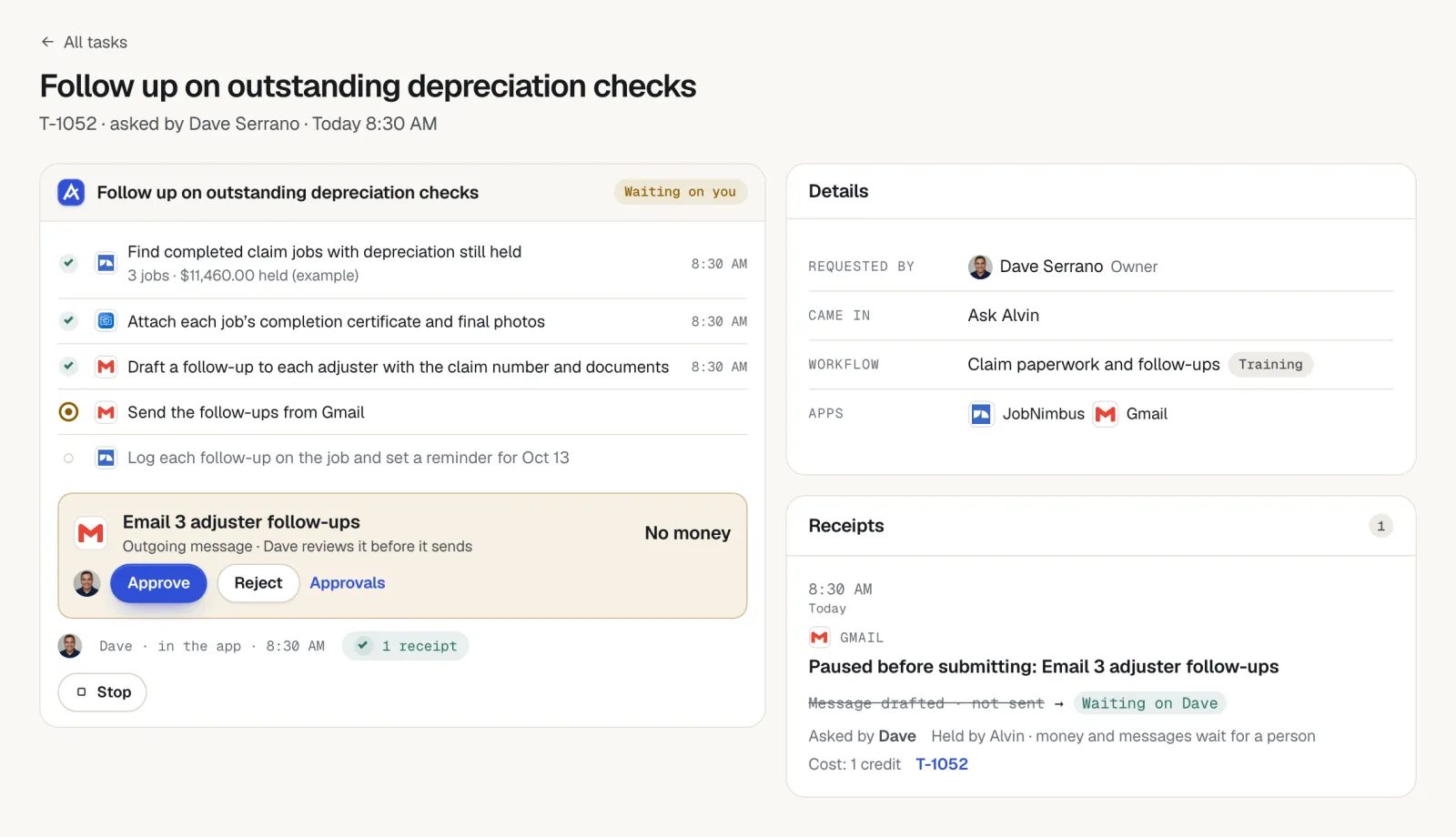
How the first check and the depreciation holdback work
- The adjuster writes the scope. The loss statement lists each line of work with a replacement cost, a depreciation amount and an actual cash value.
- The insurer issues the first check. It is usually the ACV total minus the deductible. If there is a mortgage, the lender is often named on the check and has its own endorsement process.
- The roof gets replaced. The homeowner pays the contractor from the first check plus the deductible.
- Completion is documented. The insurer typically asks for a final invoice, proof the work is complete and photos.
- The insurer releases the holdback. On a replacement cost policy, the recoverable depreciation is paid, usually up to what was actually spent.
The second half of this process has its own guide: how to get recoverable depreciation on a roof claim.
Worked example with example numbers
Mrs. Henderson's roof has hail damage. The numbers below are examples only.
| Line on the loss statement | Example amount |
|---|---|
| Replacement cost value (RCV) | $18,000 |
| Depreciation | $5,400 |
| Actual cash value (ACV) | $12,600 |
| Deductible | $2,000 |
| First check (ACV minus deductible) | $10,600 |
If her policy is replacement cost: she receives $10,600 first. After the roof is replaced and the insurer has the completion documents, the $5,400 holdback is released. She pays her $2,000 deductible out of pocket. The contractor is paid $18,000 in total: $10,600 plus $5,400 plus $2,000.
If her policy is actual cash value: she receives $10,600 and that is the full claim payment. To replace the roof at $18,000 she covers the remaining $7,400 herself: the $2,000 deductible and the $5,400 of depreciation.
The roof and the damage are identical in both cases. The policy type decides who pays the $5,400.
How to explain ACV and RCV to a homeowner in plain words
Most homeowners see the first check, notice it is far below your price, and assume either you are overcharging or the insurer is shorting them. Explain it before the check arrives. Wording you can adapt:
- At the kitchen table: "Your insurer pays in two parts. The first check covers what your old roof was worth. The second check covers the rest, and they send it after the new roof is on and we send them the final paperwork. Your deductible is your share either way."
- When the first check looks small: "That amount is the actual cash value payment. Look for the line called recoverable depreciation on your statement. That is the part they are holding until the job is finished."
- If the depreciation is non-recoverable: "Your statement shows the depreciation as non-recoverable, which means this policy pays the depreciated value only. I would rather you hear that from me now than after we tear off. Your insurance agent can confirm it."
Do not tell a homeowner what their policy covers. Point to the line on their own statement and send coverage questions to the insurer or their insurance agent. In many states a contractor also cannot waive, absorb or rebate the deductible. Check your state's rule and say so plainly when a homeowner asks.
What to record on every insurance job
A shop running 30 insurance jobs at once (as an example) loses track of holdbacks fast. Put these fields on the job record in your CRM the day the loss statement arrives:
- Insurer, claim number, adjuster name and contact.
- RCV, depreciation, ACV and deductible, copied from the statement.
- Whether the depreciation is marked recoverable or non-recoverable.
- First check: amount, date received, whether a mortgage company must endorse it.
- Any supplement sent and its status. See roofing supplement follow-up.
- The policy's deadline for completing repairs and claiming the holdback, if the homeowner has shared it.
- Holdback: documents sent, date sent, date paid.
What Alvin handles and what stays with you
| Alvin does | You do |
|---|---|
| Reads the forwarded loss statement and fills the claim fields on the job in your CRM | Meet the adjuster and discuss scope |
| Tracks first check, supplement and holdback status per job, and lists what is open in the morning briefing | Explain the policy type to the homeowner and answer their questions |
| Assembles the completion packet: final invoice from QuickBooks, completion certificate, photos | Review and approve the packet before it goes out |
| Drafts status emails to the homeowner or the insurer's claims inbox, held for your approval | Any conversation about what the claim should pay |
| Keeps a receipt of what was sent, when, and who approved it | Decide how to handle a job where depreciation is non-recoverable |
Alvin does the paperwork and the follow-up. Alvin never negotiates a claim, interprets a policy or argues a price with an adjuster.
To run the numbers from a loss statement, use the free ACV vs RCV calculator.
Frequently asked questions
What is the difference between ACV and RCV on a roof?
RCV, or replacement cost value, is the cost to replace the roof today. ACV, or actual cash value, is that cost minus depreciation for age and wear. A replacement cost policy usually pays ACV first and the depreciation later; an actual cash value policy pays ACV only.
Why is the first insurance check less than the roofing estimate?
The first check is usually the actual cash value minus the deductible. On a replacement cost policy the insurer holds back the depreciation until the roof is replaced and the completion documents are in. The homeowner also owes the deductible, which the insurer never pays.
How do I know if a roof policy is ACV or RCV?
Check the policy declarations page and any roof endorsement, then look at the loss statement for the claim. If the depreciation is labeled recoverable, the claim is being paid on a replacement cost basis. If it is labeled non-recoverable, it is being paid at actual cash value. The insurer or insurance agent can confirm.
How is roof depreciation calculated?
Insurers generally depreciate a roof based on its age, its expected life and its condition, and each insurer applies its own method. Some policies use a fixed schedule by roof age and material. The loss statement shows the depreciation taken on each line.
Can a roofer cover the homeowner's deductible?
In many states it is illegal for a contractor to waive, pay or rebate an insurance deductible. Rules vary by state, so check the law where you work. The safe practice is to collect the deductible and show it on the final invoice.
Know where every claim check stands.
Forward the loss statement to Alvin. Alvin updates the job, tracks both checks and builds the completion packet for you to approve.