How to follow up on a plumbing estimate: timing and scripts
Follow up on a plumbing estimate the same day you send it, again after about 2 days, then around days 5, 10 and 21, and stop after that last message. Keep each message short, name the job and the price, and make it easy to say yes, ask a question or say no. Alvin watches for estimates that have gone quiet and drafts each follow-up for your approval.
On this page
Which plumbing estimates need follow-up
Most service calls close in the driveway. The estimates that go quiet are the bigger ones, where the customer wants to compare bids, talk to a spouse or find the money.
Scroll sideways to see every column.
| Job type | Why it stalls | What helps |
|---|---|---|
| Whole-house repipe | Large price, disruption, several bids | Explain the schedule and wall repair plan |
| Water heater replacement (not yet failed) | "It still works" | Tank age and what a failure looks like |
| Sewer line repair or replacement | Hard to see, hard to believe | The camera video and a marked-up photo |
| Bathroom or kitchen remodel rough-in | Waiting on the general contractor or other trades | A date your price holds until |
| Water treatment, tankless upgrade, fixtures | Optional, easy to postpone | Options at two or three price points |
Before any follow-up, check that the estimate itself can stand alone: a clear scope, a total, what is excluded, how long the price is good for and a way to accept. A follow-up cannot rescue an estimate the customer does not understand.
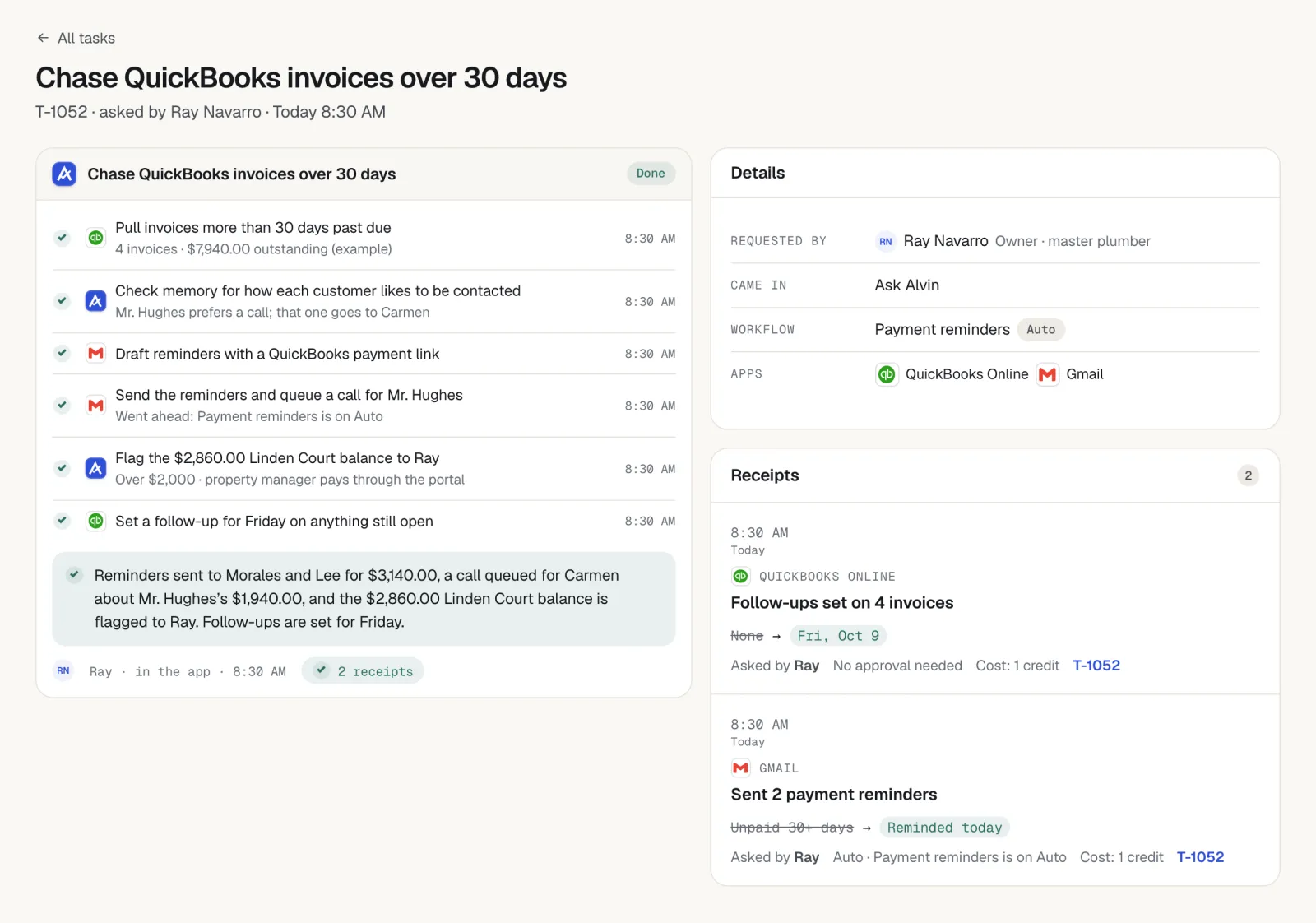
The plumbing estimate follow-up schedule
- Same day: confirm it arrived. A short text within a few hours of sending the estimate.
- Day 2: offer to answer questions. Add one useful thing, such as the camera video or a photo.
- Day 5: a phone call. A real person, ideally the plumber who was in the house. Leave a short voicemail and text right after.
- Day 10: a reason to decide. Schedule openings or the date the price expires. Only say it if it is true.
- Day 21: close the file. A polite last message that makes "no" or "not now" an easy reply.
Pause the sequence the moment the customer replies, books or asks you to stop. Alternate text and email if you have both, and keep to normal business hours.
Rules for business texts and calls (consent, opt-out, calling hours) depend on federal and state law. Check the rules that apply to you or ask your attorney. This article is general information, not legal advice.
Message wording you can copy
Change the names and details. The customer here is a fictional example.
Same day (text): "Hi Mrs. Henderson, this is Dana at [Company]. I just emailed the estimate for the sewer line repair Luis looked at today. Can you confirm it came through? Reply STOP to opt out."
Day 2 (email or text): "Hi Mrs. Henderson, here is the camera video from Tuesday. The break is at the 42 foot mark, where the roots come in. Happy to walk through the estimate by phone if that helps. What questions can I answer?"
Day 5 (voicemail, then text): "Hi Mrs. Henderson, Luis from [Company]. Calling about the sewer line estimate, in case you had questions on the two options. I'm around until 5 today at [number]."
Day 10 (text): "Hi Mrs. Henderson, we have crew openings the week of the 14th for the sewer repair. The estimate is good through the 30th. Would you like me to hold a day, or is there something in the estimate you'd like changed?"
Day 21 (email): "Hi Mrs. Henderson, I'll close out the sewer line estimate on our end so we stop bothering you. If the timing changes, reply to this email and we'll pick it back up. If you went another way, no hard feelings, and it would help us to know what decided it."
More versions by trade and job size are in the estimate follow-up templates.
How to handle "too expensive"
"Too expensive" usually means one of three things: the customer has a lower bid, does not have the money right now, or does not see why the job costs that much. Ask which one before you answer.
- Ask first. "Thanks for telling me. Is it the total, or is it compared to another quote?"
- If there is a lower bid, compare scope. Ask what the other quote includes: permit and inspection, pipe material, wall or concrete repair, cleanup, warranty. A lower number often covers less.
- If it is the total, change the scope, not the price. Offer a smaller job: a spot repair now and the full line later, a standard tank where you quoted tankless, or the work in two phases.
- If it is cash, talk about payment. A deposit and progress payments, or the financing you already offer.
- If you discount, trade for something. A flexible start date or a filler slot on a slow day. A price drop with no reason tells the customer the first number was padded.
Wording: "I understand. I can't do the same job for less, but I can show you a smaller scope that fixes the break now and leaves the rest of the line for later. Want me to send that?"
If your prices are built from real costs, you will know how far you can move. That math is in plumbing flat rate pricing.
When to stop
- The customer says no, or says they hired someone else. Thank them and mark the estimate lost, with the reason.
- The customer asks you to stop, or replies STOP. Stop on every channel.
- Five touches over three weeks with no reply. Send the closing message and end the sequence.
- The customer says "not now". Ask when to check back, set one reminder for that date and leave them alone until then.
Record the outcome on every estimate. After a few months, the lost reasons show whether the problem is price, speed or follow-up itself.
What Alvin handles and what stays with you
| Alvin does | You do |
|---|---|
| Runs a scheduled check of open estimates in your field service app or CRM and lists the ones gone quiet | Decide which estimates are worth chasing and the timing |
| Drafts each follow-up email or text from the estimate, in your wording, under your own accounts | Approve each message before it goes. Nothing reaches a customer without a person |
| Applies opt-out and quiet-hours rules, and pauses when the customer replies | Make the phone calls. Alvin has no phone line |
| Remembers what the customer said last time and attaches it to the estimate | Handle price conversations and any change in scope |
| Puts stale estimates in the morning briefing, with a receipt of what was sent and who approved it | Mark estimates won or lost, and why |
Frequently asked questions
How soon should I follow up on a plumbing estimate?
Send a short message the same day to confirm the estimate arrived. Follow with a second message about two days later that offers to answer questions. Waiting a week gives the customer time to book whoever followed up first.
How many times should a plumber follow up on an estimate?
About five touches over three weeks is a reasonable limit for larger jobs: same day, day 2, day 5, day 10 and day 21. Stop sooner if the customer says no or asks you to stop. After the last message, mark the estimate closed.
What do you say when following up on a plumbing estimate?
Name the job, offer one useful thing such as a photo or video of the problem, and ask a question that is easy to answer. For example: "Here is the camera video from Tuesday. What questions can I answer about the estimate?" Avoid "just checking in", which gives the customer nothing to respond to.
What should I say when a customer says the plumbing estimate is too expensive?
Ask whether the concern is the total or a lower competing quote. If it is a competing quote, compare what each one includes. If it is the total, offer a smaller scope, a phased job or payment terms before you cut the price.
Is it better to text or call to follow up on an estimate?
Use both. Texts and emails are easy for the customer to answer and work well for the first touches. One real phone call from the plumber who visited, around day 5, catches the questions people will not type. Follow the consent and opt-out rules for texts and calls where you operate.
Every estimate gets an answer.
Alvin finds the estimates that went quiet, drafts the next message and waits for your approval. See what Alvin does for plumbing shops.